Chapter 29: Tooling is Not Enough
The Silver Bullet Fantasy vs. The Grumpy Manager
Fresh computer science graduates love silver bullets. You will regularly hear wide-eyed pitches like: "If we buy Tool X, deploy Framework Y to the server, and upgrade Library Z to version 123, the system will practically build itself!"
Seasoned engineering managers tend to swing to the opposite extreme: becoming cynical grumps who write off any unfamiliar technology as a useless gimmick.
Both traps will kill your organization. Dismissing every new idea closes you off to genuine efficiency gains, while accepting every pitch turns your codebase into a sandbox. Stay open-minded. Use self-motivated engineers to scan the horizon for fresh tools, but evaluate every proposal through a cold, pragmatic lens.
Automate for ROI, not for your ego
Rule of thumb: Automate everything that can be automated efficiently.
"Efficiently" means achievable with low labor costs and a predictable return on investment (ROI). Do not turn a client project into a self-funded research lab trying to solve Artificial General Intelligence or build custom language models on the client’s dime. We are in the service delivery business; our job is to solve concrete problems within a sensible budget.
Focus automation where manual work creates acute friction and human error:
- Deployment Pipelines (CI/CD): Releasing builds manually is repetitive, stressful, and prone to human error. Automate it completely.
- Regression Suites for Stable Core Modules: Free your engineers from manually re-testing stable legacy features after every minor build update.
The Three Guardrails of Automation
Before committing team capacity to building automated tooling, run the initiative against three strict operational boundaries:
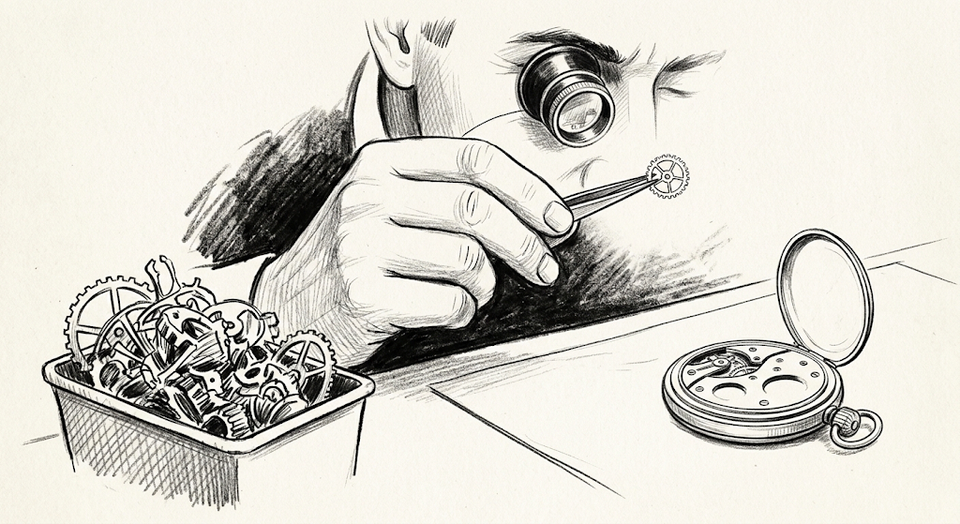
- Enforce Manual Mechanics (The Under-the-Hood Rule): Engineers must understand how the underlying system works manually. If the automated pipeline explodes at 2 AM, the team must know how to inspect the state, run the scripts by hand, or repair the runaway script without panicking.
- Recognize Human Superiority in Domain Reality: Do not automate tasks that humans perform effortlessly. Evaluating whether a workflow feels right to an end-user is nearly impossible to automate cleanly, but it takes five minutes for a human operator to validate.
- Require Pain-Driven Adoption (ROI > 0): Never adopt enterprise-grade machinery simply because "that's how big tech companies do it." If you burn your project's runway building high-tech deployment pipelines for a three-page internal tool, you will end up working for free when the budget dries up. Every tool must solve acute, existing pain.