Chapter 31: Toxic Infrastructure
The Palm Tree Fallacy & Urban Talent Density
Your team works inside a physical workspace, not under the shade of palm trees on a Pacific beach. The allure of coding under tropical palms is a photo-filter myth. Real tropical beaches come with sweltering heat, humidity, insects, and monsoons—and staring at white sand does not motivate anyone to ship complex software on-time.
Offices exist in cities for two reasons: talent density and educational infrastructure. You build companies where universities and engineering talent already reside. Because your team spends their 45 weekly hours inside four walls, the physical quality of that structure directly impacts performance.
Environmental Baselines
- Natural Light: An office needs windows—the more, the better. Despite what self-proclaimed night owls argue, natural sunlight triggers the exact neurological response needed for sustained cognitive endurance.
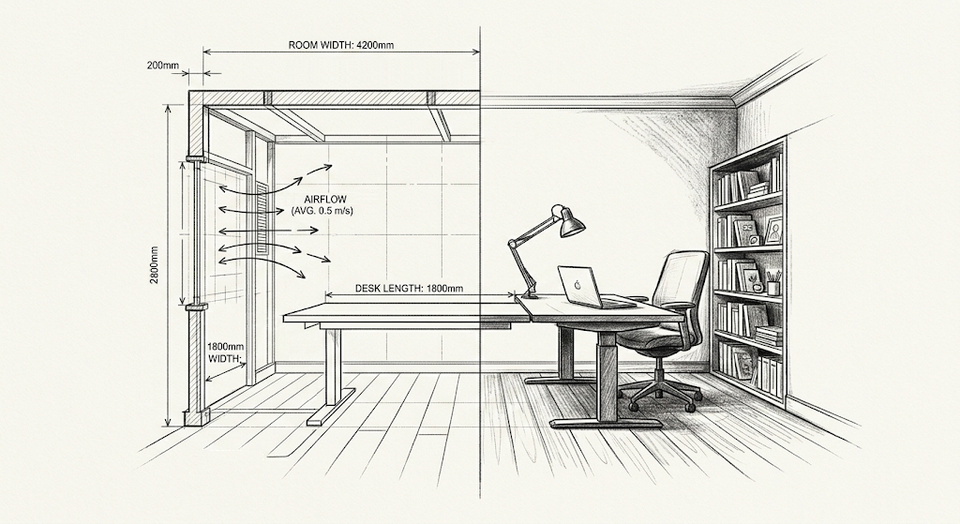
- Air Quality & Climate: If you want a team crawling around like sluggish flies, skimp on the air conditioning. If you want constant sick leave, let the AC or heating dry out the air completely without humidification or fresh air circulation.
- Seating Proximity: Whether you choose private rooms, cubicles, or an open layout, understand the trade-off. Placing team members close together increases real-time verbal communication. It speeds up problem-solving, but it makes decisions harder to document. Choose deliberately based on your project's control-versus-agility needs.
Tools, Not Status Symbols
Hardware and office furniture must fit the task. Gold-encrusted leather chairs and exotic mahogany desks in a production environment are an absurd vanity metric.
Tables, chairs, and computers are industrial tools, not indicators of corporate status. Have you ever seen a gold-plated hammer drill on a construction site? No. Because a hammer drill is built for raw utility, not showmanship.
Do not force your team to work on worn-out, obsolete junk, but eliminate artificial status-seeking when purchasing equipment. Buy high-grade, utilitarian tools built strictly for output.
Micro-Friction and Individual Quirks
Physical irritations drain cognitive capacity every single day:
- A flickering ceiling light subtly wears down focus.
- A synthetic chair fabric that triggers skin allergies is not a whim—it is an operational blocker.
Build enough rapport so team members feel comfortable bringing these physical micro-irritations directly to you. It is far better to know about an engineer's personal quirks—like someone refusing to sit next to a tall storage cabinet—than to suffer a silent, continuous drop in team productivity.