Chapter 21: Builders, Auditors, and Systemic Quality
Aeronautical Origins & The Eternal Rivalry
Long ago, during my time at an aerospace university on the aircraft manufacturing faculty, our stream was split into four groups: two aircraft builders, one engine builder, and one rocket/space group. Even though we were primarily IT-focused, we were steeped in mechanical fundamentals—how planes fly, how they are assembled, and what holds them together.
Naturally, we absorbed the eternal rivalry between the "airframe" and "engine" camps. The core debate was simple: which component is more important? The airframe builders argued that a glider flies perfectly fine without an engine, pointing proudly to motorless aircraft. The engine builders countered that if you bolt a powerful enough engine to a wooden fence, the fence will fly. It was a lighthearted, generations-old feud, but it revealed a universal truth: people doing the same overarching job desperately want to present their specific role as more critical, noble, and indispensable than everyone else's.
The Builder vs. Auditor Mindset
Bring this dynamic into software development, and you get the perpetual tension between developers and QA engineers.
There is a persistent myth that testers "don't create anything" and that a system wouldn't exist without developers. But let us be clear: no system is vastly better than a broken system. If people rely on software, it must perform its intended function. Until an assembly passes rigorous quality control, it isn't an engineering product—it is just a rough workshop prototype.
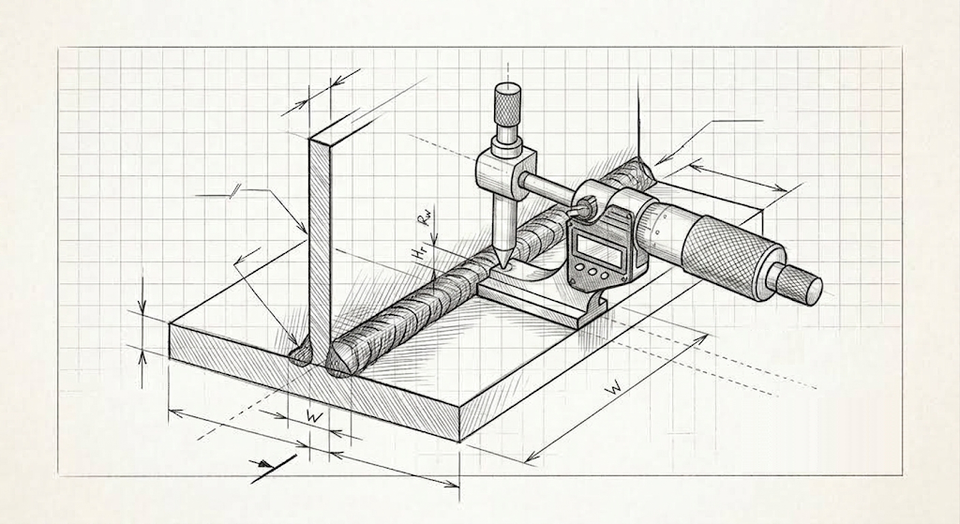
Arguing over whether a developer or a QA engineer is more important is like debating whether a welding machine or a micrometer matters more in heavy fabrication. The welding machine fuses structural beams together; the micrometer verifies that the thermal deformation didn't throw off the critical tolerances. One creates the bond, the other guarantees it won't snap under operational load. Even as generative AI agents begin drafting syntax and automated scripts handle routine execution, the underlying human division remains intact: the Builder generates with optimistic creation, while the Auditor verifies with adversarial skepticism. Neither is a simple assembly-line worker. They are both engineers working on the exact same mechanism.
The Postman and Delivery Ethics
The most volatile moment in this partnership is how defects are communicated.
Developers build systems with the emotional attachment of an artist carving marble—they pour time, logic, and pride into the build. Then an QA engineer stress-tests the application, breaks it, and naturally feels a surge of professional triumph. They found the edge case! They did their job!
And then, beaming with joy, the QA walks over to tell the developer that their precious creation is broken.
To understand why this causes fires, consider a dark analogy: A mother raises a son, he goes to war, and a tragedy occurs. The local mail carrier receives the telegram. Delivering the mail is his job—he finally has work to do. Is he relieved to have tasks? Yes. Can he show up at the mother's doorstep grinning? Absolutely not.
When an auditor breaks a build, they should celebrate the win quietly within their own circle, put on metaphorical mourning clothes, and deliver the bad news to the developer in a measured, sympathetic voice. Developers are sensitive, proud, and easily offended. If you want to avoid petty civil wars in the office, watch your delivery. Conversely, developers must remember that QA engineers aren't enemies—they are saving the team from public embarrassment.
The Boundary of Leakage
A defect caught inside the team is simply the normal process of software development. A defect caught by the client after release is a problem—it drains team reputation, provides leverage to reduce contract payouts, and destroys trust.
Every member of the project works toward a single goal: shipping a working system. The manager’s duty is to police the team climate, keep egos in check, encourage the defensive, and remind everyone that builders and auditors are just two hands operating the same machine.