Chapter 25: The Art of Delegation
"If you do too much, people depend on you. And if you do nothing, they lose hope… When you do things right, people won't be sure you've done anything at all."
— Futurama, Episode "Godfellas"
Delegation is easily one of the most difficult practices in project management. To cut through the corporate jargon, let us start with a real-world lesson from early in my career.
The Scale Factory Bottleneck
During my fourth year at university, I decided it was time to gain practical industry experience. The IT sector in Ukraine was just gathering momentum, and candidates far outnumbered open roles. I landed a position at a company that manufactured industrial strain-gauge scales.
By local standards, it was a sizable operation: roughly 50 employees, featuring an engineering office and an active assembly floor. On paper, it looked thriving. But step inside, and the operational flaws were staggering.
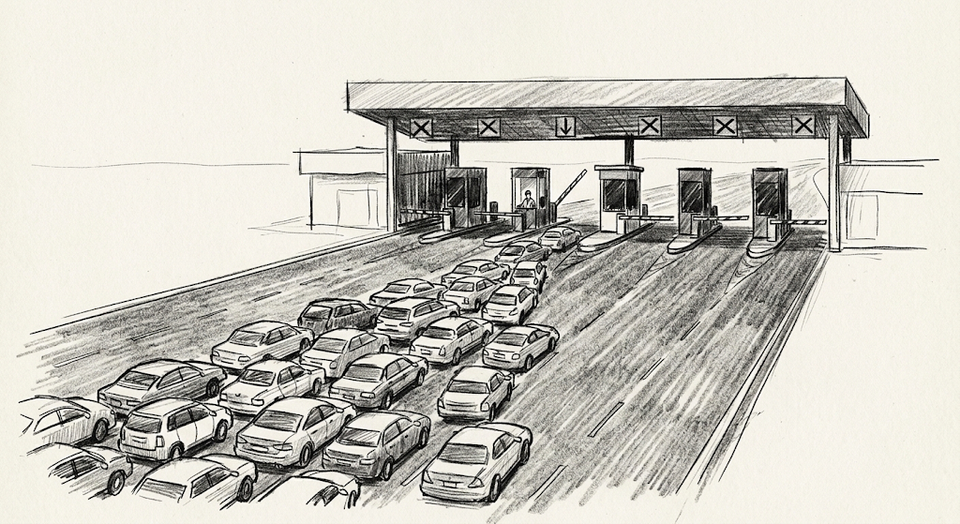
The company was founded by a brilliant, highly perceptive engineer. It had expanded organically from a ten-person laboratory into a mid-sized enterprise. Yet the internal management structure filled my student self with awe, and my modern self with horror: every single decision ran directly through the director.
From high-level accounting, hiring, firing, and client deadlines down to the exact bolt dimensions for securing a scale platform, the director personally signed off on everything. One individual attempted to solve the operational friction of 50 people, while those 50 people devolved into mechanical task-executors.
The results were predictable:
- Permanent Delays: Work ground to a halt while engineers waited in line for "access to the director."
- Role Degradation: Senior engineers spent days performing secretarial or basic technician tasks because they lacked authority to move forward independently.
- Talent Drain: Employees who wanted to build real systems left. Those comfortable doing nothing while listening to lectures about missed deadlines stayed, mastering the art of looking perpetually busy.
The Myth of Unlimited Scale
There is a famous line from the Oscar-winning classic Soviet film Moscow Does Not Believe in Tears, where a factory director managing 3,000 employees states: "Managing three people is hard. Once you learn to organize three, the total number doesn't matter."
My first director took that line too literally. The number of direct reports matters immensely.
Claiming scale is irrelevant is like saying, "Building a three-room house is hard; once you master that, adding rooms is identical." By that logic, a crew capable of slapping together a mud-brick hut could construct a 100-story skyscraper without changing their engineering approach.
As the number of people—or structural rooms—increases, the underlying mechanics must change. What you once held in your head must now be documented, structured, and systematically delegated.
The Two Stages of Engineering Management
Transitioning from an individual contributor to a leader happens in two distinct operational phases:
Stage 1: Managing One Person
Moving from an individual engineer to managing your first direct report. Previously, you only answered for yourself. Now, you must guide an independent human mind—not as a mindless order-taker, but as a load-bearing engineer.
Success here requires transferring technical decision-making authority. You guide them through contextual questions, hints, and bounds, acting like a attentive gardener tending flowers rather than a prison guard monitoring a cell.
Stage 2: Breaking the "Sun" Anti-Pattern
Once you master Stage 1, the temptation is to keep adding direct reports around yourself in a wide circle—placing the manager at the center like a radiant "Sun" surrounded by orbiting subordinates.
The "Sun" pattern breaks under structural load. A manager cannot directly assign, track, and review tasks for an infinite number of people.
Based on hard operational testing, seven direct reports is the maximum span of control for normal operations. "Normal" means managing without chronic panic, allowing time for daily tactical execution as well as multi-month strategic planning.
Once your team exceeds seven people, you must select capable team members to step into management roles. You transition into a second-tier ("grandparent") manager, delegating managerial authority to your leads just as you previously delegated technical authority.
Socratic Delegation: The Farmers Market Principle
When training new managers, do not give them raw answers. Present scenarios, ask how they would solve them, and allow them to make controlled mistakes in low-risk environments.
A powerful delegation tool is asking a subordinate how they view a problem and having them propose multiple execution paths.
Consider this real-world analogy: A grandmother asks her daughter to have her husband buy ingredients for soup at a local farmers market near closing time.
If the wife gives her husband a rigid shopping list, he acts as a passive executor. If the market lacks those exact items, the task fails.
Instead, the wife asks her husband: "See what vendors are still open at the market and suggest what soup we can make."
Now, the husband becomes an active decision-making agent on the ground. He analyzes field conditions and reports back options:
"We can make tomato soup or lentil soup. Broccoli is out because those stands are closed."
The daughter gets rich field context, and the grandmother can step in with strategic oversight:
"The neighbor is coming over and he is allergic to lentils, so let's go with tomato."
By delegating the problem-solving frame rather than a rigid instruction list, you force your team to think, adapt, and supply actionable context.
Seven Disasters of Centralized Control
If you refuse to delegate and insist on keeping all decision-making authority in your own hands, the system will break in one of seven ways:
- Physical Exhaustion: Chronic overload leads directly to burnout, stress-induced illnesses, and physical collapse.
- Catastrophic Decision Errors: Trying to resolve 50 urgent issues in an hour leaves one minute per task. You cannot digest context in 60 seconds; you will make fatal miscalculations.
- Zero Operational Redundancy: You can never take a vacation or a sick day. Managing critical outages over a spotty mobile connection with a 39.5°C (103°F) fever while on holiday is not leadership—it is process failure.
- Brain Drain of Top Talent: Capable engineers leave organizations where they have no autonomy or room for professional growth.
- Cognitive Atrophy: The engineers who stay will stop thinking entirely. You will end up paying senior salaries to people who operate like juniors because you conditioned them to wait for orders.
- Cultural Disconnect & Mutiny: If a CTO directly micromanages entry-level juniors across multiple reporting layers, senior staff will view high-level decisions as out-of-touch commands, sparking internal resistance.
- The 24/7 Shift: Five subordinates working 8-hour days generate 40 hours of operational output. If you refuse to delegate, you will end up trying to absorb those 40 hours yourself on top of your own workload.
It's your call.