Chapter 41: Risk as a Growth Engine
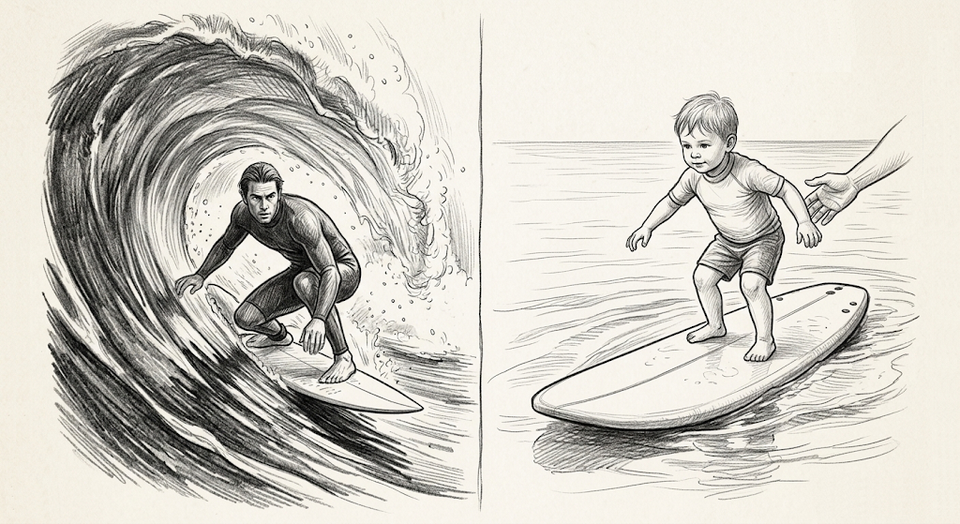
Risk is the Price of Margin
In custom software and engineering services, zero risk equals low margin. If a team produces predictable commodity work, competitors copy the output, margins compress, and price wars begin.
To command premium value, an engineering organization must build novel solutions—and novelty inherently introduces risk.
As Tom DeMarco and Tim Lister noted in Waltzing with Bears, risk management is not about avoiding danger; it is about managing exposure. The goal is neither total safety (assembly-line stagnation) nor wild gambling (casinos), but managing a balanced portfolio of medium-risk initiatives.
High-Risk Projects: The Rules of Engagement for Wartime
A high-risk project is defined by tight deadlines, fixed budgets, novel technology stacks, or unfamiliar domain boundaries.
During a high-risk delivery cycle, the organization is in Wartime. The sole objective is execution.
- Zero Structural Experiments: Do not promote mid-level engineers to lead roles mid-flight. Do not onboard unvetted hires directly onto critical paths.
- Strict Capability Alignment: Senior engineers handle senior architecture. Mid-level engineers execute within proven domains.
- Leverage Muscle Memory: Wartime is for cashing in on existing skills, securing revenue, and forging team cohesion through shared victory—not for testing unproven tools or personal development.
Adding operational or organizational risks to an already high-risk project creates compound risk, which inevitably leads to project failure.
Low-Risk Projects: The L&D Sandbox
Real employee development and architectural innovation should occur inside low-risk, predictable projects. When domain mechanics are well-understood and deadlines have comfortable buffers, the project becomes a controlled sandbox.
- Promote Under Safety Nets: Hand the wheel to mid-level engineers on low-risk deliveries. Giving a rising engineer primary responsibility inside a "safe harbor" builds confidence and operational autonomy. If they make a misstep, senior staff are already present to steady the ship before damage occurs.
- Battle-Test New Technologies: Never evaluate a new framework using 3-page "Hello World" tutorials. Test new tools, libraries, or delivery methodologies on real-world requirements inside low-risk client projects. You will uncover hidden edge cases—memory leaks, deployment friction, scaling limits—without risking company-critical relationships.
The Engineering Portfolio View
A capable engineering leader maintains an active map of team career aspirations and matches them against project risk profiles.
High-risk projects generate revenue and stress-test execution discipline; low-risk projects build human capital and vet the future tech stack. Interleaving these project types prevents burnout, accelerates skill acquisition, and ensures the organization never stops evolving.