Chapter 04: Selling Ideas
From Coercion to Persuasion
Throughout human history, there are two fundamental ways to advance an objective: coercion and persuasion. Coercion is fast and primitive—use force, intimidate the opponent, seize the asset, and celebrate short-term victory.
The structural flaw of coercion is physical law: applying force creates equal and opposite resistance. In software engineering, attempting to command highly educated specialists by fiat triggers passive-aggressive resistance, malicious compliance, or attrition. Human civilization evolved past reliance on sticks and fists by developing the art of persuasion.
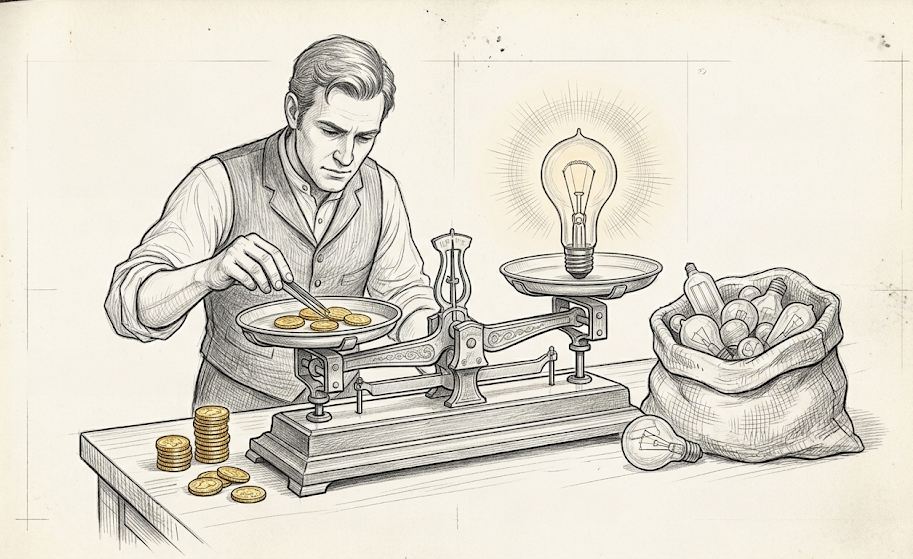
Persuasion is simply the commercialization of ideas. Every professional trades ideas daily. High-value ideas are bought when the counterpart sees tangible self-interest; poorly marketed or defective ideas rot on the shelf of human relationships.
For an engineering lead, selling ideas is not an optional soft skill—it is your core operational lever. Locked within fixed budgets, rigid deadlines, and non-negotiable quality standards, your job is to align human vectors without formal authoritarian power.
Filtering Noise: Glossy Charts vs. Muffled Diamonds
A lead is bombarded daily with competing concepts from executives, clients, and internal engineers. Your operational filter must distinguish high-yield solutions from toxic distractions:
- Rotten Ideas in Shiny Packaging: Frequently, terrible features or architecture choices are presented wrapped in polished slide decks, vanity metrics, and executive buzzwords.
- Diamonds in the Dust: Conversely, truly brilliant technical breakthroughs often start as unpolished mumbling from a grumpy senior engineer staring at their terminal.
Your responsibility is to extract those unpolished diamonds from the background noise, polish them, and sell them up to executives and out to clients.
Multi-Node Alignment: The Six Markets Framework
Selling an idea is rarely a single, one-sided transaction. To execute system-wide change, managers should apply relationship marketing principles across the Six Markets Model—understanding that marketing is not superficial hype, but the process of uncovering latent possibilities and articulating concrete benefits across every stakeholder node:
- The Internal Market (Current Pod): Selling the technical vision to the engineers who must build and maintain it, turning task execution into shared craft.
- The Customer Market: Aligning product managers, clients, and end-users on scope trade-offs, timelines, and feature viability.
- The Influence Market: Navigating executive sponsors, enterprise architects, governance boards, and external regulators who hold veto power.
- The Supplier & Procurement Market: Securing favorable terms, support, and integration commitments from third-party vendors and contractors.
- The Recruitment Market: Framing your team's technical choices and culture so that high-caliber talent actively wants to join your pod.
- The Referral & Alumni Market: Maintaining reputation capital with former clients and departed engineers who serve as long-term brand advocates.
The Peak of Idea Sales: Socratic Inception
The highest tier of influence is not pitching—it is guided discovery. By framing a precise sequence of technical questions and operational constraints, you lead the client or senior developer to articulate the target solution themselves.
Once an individual speaks the idea aloud, psychological ownership shifts. They will defend and execute that solution fiercely—because in their mind, it was entirely their creation.
The Tom Sawyer Benchmark
Mark Twain provided the ultimate case study in project management and non-monetary alignment long before the invention of Agile, NLP, or modern management literature.
Tasked with the dull, weekend labor of whitewashing Aunt Polly’s fence, young Tom Sawyer achieved what every Delivery Manager strives for:
- Scope & Quality: He completed the fence painting on schedule and to exact quality standards, earning the final stakeholder sign-off and reward from Aunt Polly.
- Resource Optimization: He reframed mundane toil into an exclusive privilege, enticing a team of peer developers to take over execution voluntarily.
- Positive Cash Flow: Not only did he avoid paying for labor, but he also extracted capital from his execution team—trading access for a dead cat on a string, bits of blue glass, and a brass door knob.
- Team Morale: The workers walked away thoroughly satisfied with the process, feeling privileged to have participated.
Tom Sawyer didn't use formal authority or corporate platitudes. He reframed the perception of value, aligned incentives, and delivered a predictable commercial outcome. That is the essence of team leadership.