Chapter 11: The Instrument of Delivery
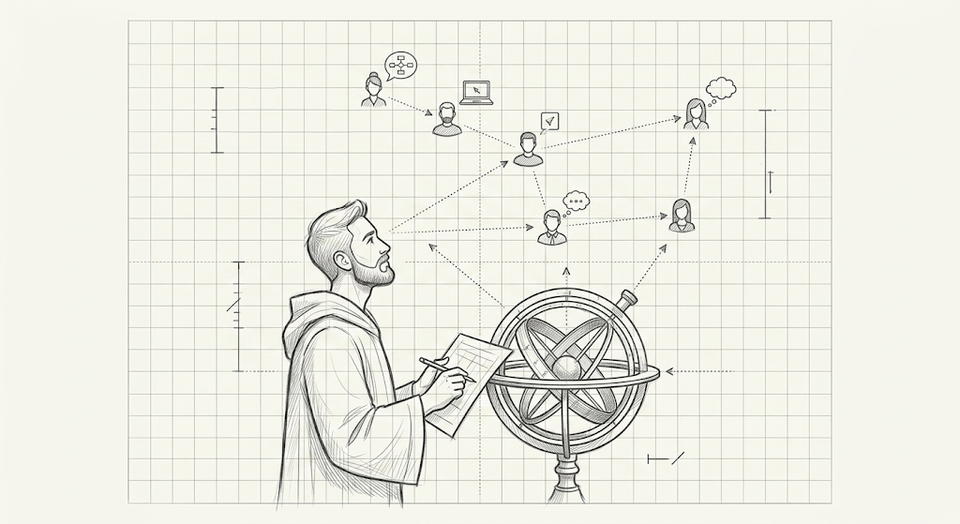
The Parachute Principle: Stewardship Without Worship
How a project manager treats their team directly governs four critical variables:
- Outcome Trajectory: Whether the current project succeeds or collapses.
- Team Health: Whether the group develops into a high-performing unit or degrades toward dissolution.
- Operational Throughput: The speed, accuracy, and efficiency of task execution.
- Engineer Mindset: The psychological well-being of developers during delivery.
Paratroopers and pilots share a sacred rule: never sit on your parachute. Because their lives depend on that tool, treating it with casual disrespect is unthinkable.
A manager must hold the same attitude toward the team. You must protect and respect them, but without falling into fanatical coddling or idolization.
The Tradesman’s Tools & Professional Distance
Every profession relies on specific means of production. A plumber depends on pipe wrenches and pliers; a long-haul trucker depends on a rig; a farmer depends on a combine harvester. A master tradesman keeps their tools sharp, clean, and perfectly tuned. A careless hack leaves them dirty, damaged, and scattered across the shop floor.
Your team is your instrument of execution. Value your people, invest in their growth, and build an environment where you can rely on them completely. However, maintain a strict boundary—do not let deference turn you into a slave to the team.
As a manager, you hold operational authority: you decide strategic direction, manage compensation, handle promotions, and approve time off. You cannot be "one of the guys" or a universal buddy on the job. Management is a distinct discipline focused on human systems; executing it requires empathetic care combined with clear authority.
Factory Acceptance & Structural Integrity
Inheriting a new team is identical to taking delivery of equipment at a manufacturing plant. You perform an initial inspection: examine their track record, assess current capability, run baseline tests, and begin work once risks are understood.
As work proceeds, you must continually monitor human capacity just as a machinist monitors machine wear:
- The Cracked Handle: You never drive nails with a hammer that has a cracked wooden handle—doing so risks injuring the operator and bystanders. An engineer suffering from acute health issues or severe personal distress must never be placed on high-risk critical paths. Assign low-risk tasks or pause their workload until they recover.
- The Defective Tool: If a hammer bends, throws sparks, and shatters during normal use, you discard it. A team member who repeatedly produces reckless errors, incites internal drama, disappears without notice, or shirks accountability must be removed from the team.
- The Dull Blade: When a tool becomes loose or dull, you tighten the fittings and sharpen the edge. Engineers similarly require structured calibration and professional development—a process of continuous refinement.
How to structure individual professional development, conduct calibration check-ins, and elevate developer capabilities without micromanagement will be explored in detail in Part IV.