Chapter 12: Internal Transparency & Mutual Trust
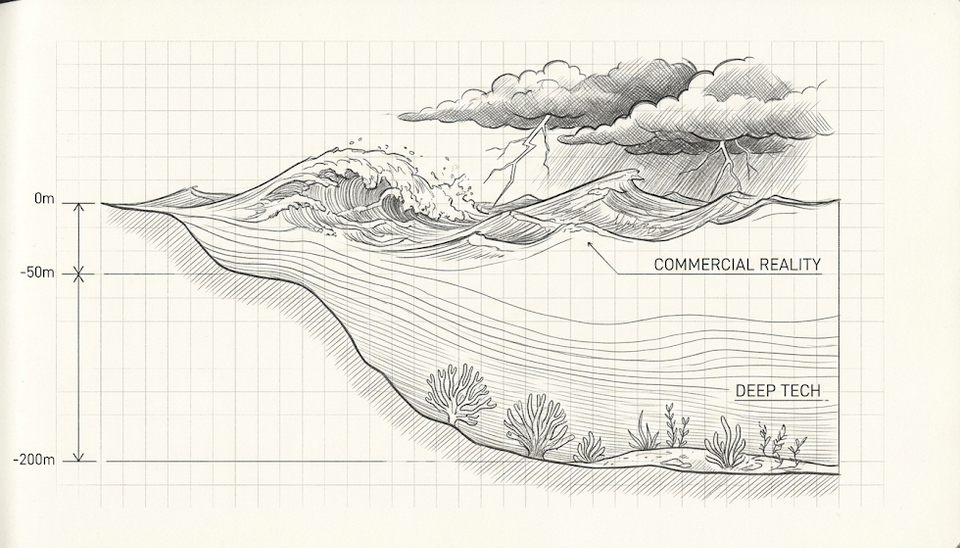
The Calibrated Transparency Model
Software engineers are analytical, creative knowledge workers—not workhorses wearing blinkers. They need to understand where they stand, what they are doing well, where they are failing, and how their daily output connects to the broader trajectory of the project and company.
However, transparency is not an all-you-can-eat chaos buffet. A junior developer taking their first steps in your organization should not be burdened with the raw, messy details of client disputes, sales negotiations, corporate tax logistics, or executive politics.
Instead, construct a role-appropriate mental model for every tier of the organization:
- Clear Horizon: Provide a simple, actionable framework that shows engineers how to maximize personal growth and team impact.
- Context Over Chaos: Give developers enough visibility to feel ownership without exposing them to administrative friction that distorts their focus.
The Submarine Gradient: Surface Storms vs. Deep Water
Client management and executive politics resemble the ocean:
- The Surface Layer: Violent, unpredictable, and constantly swept by gales, lightning, and rogue waves. Here, stakes are high, rules are unforgiving, and commercial survival demands instant adaptation.
- The Deep Water: Quiet, stable, and structured.
Many engineers prefer to operate in the calm depths, performing their functions smoothly while isolated from commercial tempests. As an engineer advances along their career ladder, their mental model must gradually shift closer to the surface. Their exposure to harsh realities, trade-offs, and commercial pressures should scale alongside their seniority.
Matching operational transparency to an engineer's maturity level protects team sanity while building deep, long-term organizational loyalty.
Default Trust & The Parachute Standard
Transparency requires mutual trust. A project manager must extend trust to their team by default—after all, you hired these people.
Constantly questioning the reliability of your own team is unsustainable. As a manager, you already balance client pressure, risk management, and scope control; adding continuous internal paranoia to your workload guarantees burnout.
However, default trust comes with a hard operational boundary:
- Unilateral Commitment: Grant full trust and autonomy to engineers from day one.
- The Parachute Line: Just as a skydiver would never leap from an aircraft using a parachute that failed during its previous deployment, a manager cannot rely on a team member who repeatedly breaches trust.
When an engineer demonstrates systemic unreliability or repeatedly drops critical handoffs, default trust evaporates—and their future with the team must be immediately re-evaluated.