Chapter 39: Mentorship by Inquiry
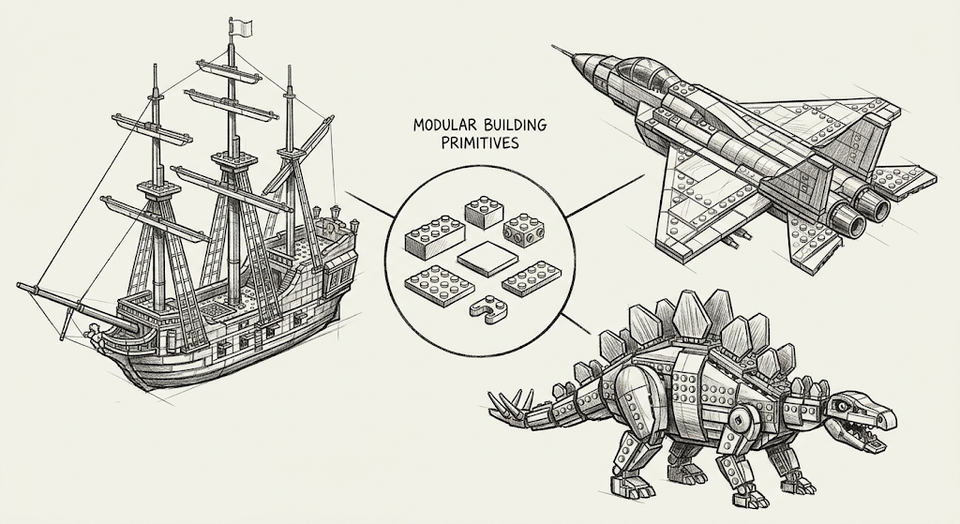
The Human Brain is Not an RDBMS
Knowledge cannot be uploaded via a USB cable right into the brain. Yet traditional training methods treat the human brain like a Relational Database Management System (RDBMS): store facts, query records, and return results.
When an engineer trained under this model encounters an unprecedented edge case, their mental database returns 0 records found. Execution halts.
Effective engineering mentorship does not build static databases; it compiles problem-solving runtimes. The objective is to teach engineers how to derive novel solutions from first principles when memory yields no exact match.
Hindsight Bias and the Illusion of Simplicity
Handing a junior engineer a complete solution creates an illusion. Because a finished answer looks obvious in hindsight, the learner assumes they would have reached the same conclusion independently.
In reality, unguided problem-solving requires navigating trade-offs, dead ends, and sub-optimal paths. Bypassing this struggle deprives the engineer of the mental muscle memory needed to evaluate alternative choices under pressure.
Base Knowledge vs. Derived Knowledge
Mentorship requires distinguishing between two distinct operational layers:
- Base Knowledge (The Primitives): Fundamental principles, syntax, domain mechanics, and architectural constraints. Base knowledge must be delivered directly through lectures, documentation, or explicit instruction. You cannot ask a learner to derive a concept if they lack the underlying primitives.
- Derived Knowledge (The Solution Space): Tactical implementations, troubleshooting steps, and design choices built on top of base primitives. Derived knowledge must never be handed out pre-packaged.
If guiding questions fail to nudge a learner toward a solution, it indicates a gap in their base primitives. Pause the coaching loop, deliver the missing primitive directly, and then resume guided inquiry.
The Socratic Protocol for Controlled Mistakes
To build self-sufficient problem-solvers, replace immediate answers with structured inquiry:
- Prompt for the Execution Plan: Before code is written, ask the engineer to walk through how they plan to address the problem.
- Permit Controlled Missteps: If their proposed plan contains a non-fatal design flaw, let them talk through the edge cases. Discovering a flaw during a design conversation leaves a deeper imprint than being corrected upfront.
- Guide Through Constraint Questions: Ask targeted questions grounded in their existing base knowledge: "What happens to memory allocation if thread count spikes here?" or "How does this choice impact database locks under heavy load?"
Refraining from giving immediate answers is slower in the short term, but it is the only scalable method to transform passive execution units into autonomous engineers.